Starter
£695
A one-page site built from scratch, mobile first, with SEO foundations and a contact form.
- One page scrolling website
- Mobile first layout
- SEO and GEO foundations
- 7 to 10 day turnaround
 Shopify
 WooCommerce
 WordPress

 Cloudflare
 Google Analytics
 Shopify
Cloudflare

Michael took over our new website a few weeks ago and has already given it a much-needed facelift. He has a great eye for detail and a real understanding of how to make each page visually appealing.
 Sarah GrantCCM Ace Ltd
Absolutely brilliant service from start to finish. He designed and built our website exactly how we wanted it, while also coming up with great ideas we hadn’t thought of ourselves.
 Steve & DylanS&D Darting Dynamics
He was amazing from start to finish, very efficient, and got the website up and running in great time. I would recommend Michael to anyone who needs this service.
 Danny FrenchD&R Fabrications
Michael built our MATS website from scratch and did such a good job that we asked him to completely rebuild our ClippaNet site as well.
 Matt ThackerDirector, MATS Ltd / ClippaNet
Working with Michael on our new website was an excellent experience from start to finish. The final website exceeded our expectations.
 Wacky PlaylandIndoor play centre, Kidderminster
Starter
£695
A one-page site built from scratch, mobile first, with SEO foundations and a contact form.
Growth Popular
£1,250
Everything in Starter, plus more pages, keyword-ready copy and 30 days of support after launch.
Professional
£1,995
Everything in Growth, plus custom animations, integrations and two rounds of revisions.
Under 50 products
from£2,495
A focused Shopify or WooCommerce store for a tight range, ready to sell.
50 to 200 products
£3,495
A fuller catalogue with structure that helps customers find the right product.
200+ products
from£5,000
Large catalogues and complex Shopify builds with custom logic and integrations.

I’m Michael, Creative Director of BM.studio in Faversham, Kent.
I design and build bespoke websites, Shopify and WooCommerce stores, and digital systems for businesses across Kent and the UK. One person, clear scopes, work that looks considered and still loads fast.
More about meBM.studio is a bespoke web design studio in Faversham, Kent, run by Michael McCorry. I build custom websites, ecommerce stores, and digital systems for businesses across Kent and the UK.
Brochure sites: Starter £695, Growth £1,250, Professional £1,995. Larger brochure builds from £3,000. Ecommerce from £2,495. Every project is scoped clearly before work begins. 50% deposit to start.
Most business websites are live within 1 to 2 weeks. Larger projects with more pages or custom features take a bit longer. I'll give you a realistic timeline upfront.
Not much. A rough idea of what you need, any photos or logo you have, and your contact details. I'll guide you through the rest. You don't need everything figured out before getting in touch.
Yes. Whether it needs a full redesign, a few pages updated, or some SEO work, get in touch and I'll take a look.
Yes. I'm based in Faversham but work with businesses across the UK and worldwide. Everything is done remotely. Most clients never need a face-to-face meeting, wherever they are.
Yes. Shopify and WooCommerce stores start from £2,495 for smaller catalogues, £3,495 for roughly 50 to 200 products, and from £5,000 for larger or more complex Shopify builds.
Shopify is easier to manage day-to-day and great if you want a platform that just works. WooCommerce (built on WordPress) gives you more flexibility and lower ongoing costs, but needs a bit more upkeep. I'll help you choose the right one for your business.
I offer optional care plans. Brochure Care is £390 a year (or £39 a month) and includes 2 hours of work and 2 small edits a year. Ecommerce Care is £990 a year (or £99 a month) and includes 8 hours of work and 4 small edits a year. Extra work is £85 an hour. Alternatively, I can hand the completed website over for you to manage directly.
Bespoke sites built from scratch, mobile first, with clear pricing and no templates.
£695
A one page site with SEO foundations and a contact form.
£1,250
More pages, keyword ready copy and 30 days of support after launch.
£1,995
Custom animations, integrations and two rounds of revisions.
from £3,000
For larger or more unusual sites that do not fit a package.
Starter is £695 for a focused brochure site. Growth is £1,250 for a fuller marketing site with keyword ready copy. Professional is £1,995 for a larger build with richer integrations. Anything beyond that is scoped from £3,000. Ecommerce starts from £2,495.
Every BM.studio website is built from scratch and mobile first. No templates, and no theme you will recognise on another Kent business website.
SEO and GEO foundations are built into every website: clean page structure, metadata, schema markup and an llms.txt file. Deeper search work is priced separately. SEO Audit £395. SEO Foundations £745.
Growth includes 30 days of support after launch and Professional includes two rounds of revisions. After that, Brochure Care is £390 a year (or £39 a month) for 2 hours of work and 2 small edits, or extra work is £85 an hour as you need it.
Shopify and WooCommerce stores configured around your brand, products and how customers buy.
from £2,495
A focused Shopify or WooCommerce store, ready to sell.
£3,495
A fuller catalogue, structured so customers find the right product.
from £5,000
Large catalogues and custom selling journeys.
Stores with under 50 products start from £2,495 and a catalogue of 50 to 200 products is £3,495. Stores with 200+ products, or more complex Shopify builds with custom checkout logic, start from £5,000. Every store covers storefront setup, product and collection structure, payments, shipping configuration and SEO ready foundations, on a fixed quote agreed before work starts.
There is no practical limit. The S&D Darting Dynamics store in Faversham launched with more than 750 products, organised into structured collections and brand categories so customers can actually find what they want.
Yes. Existing Shopify and WooCommerce stores can be redesigned, restructured or fixed rather than rebuilt from scratch. Send the link and I will tell you honestly whether it is worth reworking or starting again.
Ecommerce Care is £990 a year (or £99 a month) and includes 8 hours of work and 4 small edits a year. It is optional. If you would rather run the store yourself, it is handed over for you to manage directly.
Practical search work that makes a Kent business easier to find, not a report that goes unread.
£395
Technical issues, metadata, structure and priority fixes.
£745
Hands on metadata, schema and structure improvements.
An SEO Audit is £395: technical and on page review, local search signals, and a priority fix list you can hand to anyone. SEO Foundations is £745: hands on work with metadata, internal links, schema and page structure changed for you, with GEO foundations included.
Yes. Local work covers Google Business Profile signals, consistent business details across directories, location pages and local schema. There are dedicated pages for Faversham, Canterbury, Maidstone, Margate and the wider Kent county.
Technical and on page fixes can show up within a few weeks of Google recrawling the site. Competitive local terms usually take a few months of consistent work. Anyone promising page one in days is selling something else.
For most small local businesses a one off foundations project, plus a well kept Google Business Profile, is enough to compete. In a more competitive market, further search work is scoped and quoted as its own project.
Structure your site so AI tools like ChatGPT can read, trust and cite your business accurately.
Every website
GEO foundations are part of every BM.studio website, not a bolt on package.
£395
A practical review of how citable your existing site is today.
£645
Hands on improvements so AI answers can cite you properly.
GEO stands for Generative Engine Optimization: structuring your website so AI tools like ChatGPT, Perplexity and Google AI Overviews can read, trust and cite your business accurately when someone asks them for a recommendation.
SEO gets your page into a list of links. GEO gets your facts quoted inside an AI answer, where only two or three businesses may be mentioned at all. In practice they overlap, because clean structure, schema markup and clear factual answers help both.
Yes. Schema markup, FAQ structure, an llms.txt file, semantic HTML and fast performance are part of every BM.studio website rather than a paid add on.
Yes. A GEO Review is £395 and checks how citable your current site is, then returns a priority fix list. GEO Foundations is £645: structured service pages, FAQ answers with schema markup, llms.txt setup and factual content refinements.
Hands-on time and small edits after launch, so the site you launched does not become a second job. Care is optional, billed annually or monthly.
£390 a year
or £39 a month
For business websites after launch.
£990 a year
or £99 a month
For Shopify and WooCommerce stores.
No. Care is optional. If you would rather manage the site yourself, the finished website is handed over for you to run directly. Brochure Care is £390 a year or £39 a month. Ecommerce Care is £990 a year or £99 a month. Annual is preferred.
Day to day changes: text edits, swapping images, updating prices or opening hours, adding a team member or adjusting a section. Larger work such as new pages or new features is quoted separately.
Brochure Care is £390 a year or £39 a month and covers a light annual amend allowance plus security monitoring, backups, performance checks and priority technical fixes. Ecommerce Care is £990 a year or £99 a month, with a larger amend allowance plus plugin and app updates and checkout and payment monitoring for Shopify and WooCommerce. Work outside the plan is £85 an hour. Annual billing is preferred.
Care plan clients get priority technical fixes, so a broken form, a failed update or a checkout problem is dealt with first. Security monitoring and monthly backups mean there is always a recent version to restore.
Custom portals, booking flows and dashboards built around how the work actually happens.
£750
Workflow, users, data and integrations mapped before build.
from £7,500
Dashboards, portals, automations and tools to spec.
Optional
Hosting, monitoring and improvements after launch.
Anything beyond a standard website: client portals, booking and scheduling flows, admin dashboards, quoting tools, internal automations and integrations between software you already pay for.
Because a fixed price on a guess helps nobody. Discovery maps the workflow, the users, the data and the integrations. It is £750, capped at two calls in one week, and credited to the build from £7,500 when you proceed.
Bespoke systems start from £7,500. Discovery is £750 for two calls (about 90 minutes in total) within one week, and that fee is credited to the build when you go ahead. Final price is agreed after discovery, based on user types, data and integrations. After credit, a 50% deposit starts the build.
Usually yes. Custom builds can integrate with CRMs, email platforms, payment providers, accounting software and anything else with an API. Discovery checks what is possible before the build is priced.
Every BM.studio price in one place. Fixed written quotes, a 50% deposit to start and the balance before launch.
Shopify or WooCommerce.
What’s IncludedOptional, billed annually or monthly.
What’s IncludedYes. Every website project, including Starter, starts with a 50% deposit, and the balance is due before launch. Bespoke systems start with a 50% deposit once the £750 discovery fee has been credited.
Yes. Every project gets a fixed written quote with the scope, timeline and cost agreed before work begins, so there are no hidden extras.
No. Care is optional. Brochure Care is £390 a year or £39 a month, Ecommerce Care is £990 a year or £99 a month, and extra work is £85 an hour. I can also hand the finished website over for you to manage yourself.
Shopify theme and product library
Faversham’s dedicated darts shop took more than 750 products online for the first time with a custom Shopify theme, structured catalogue and mobile first shopping experience.
S&D Darting Dynamics is a specialist darts retailer in Faversham, Kent, with a shop on Salters Lane. Steve approached me to discuss making the range available online. The business had real depth in store: major brands, player collections, accessories, and the kind of product knowledge you only get from a dedicated darts shop. What it did not have was a website.
The brief was straightforward. Build a mobile first Shopify store from scratch, organise a large product catalogue properly, and make the online experience feel as serious as the physical shop. Work started on 25 April 2026.
A lot of ecommerce projects are really brochure sites with a buy button attached. This was not one of those. S&D sells technical products to people who know what they are looking for. Weight matters. Brand matters. Stem length matters. Flight shape matters. Get the structure wrong and the store feels amateur within seconds.
The product library was the project. The theme had to look the part, but the real work was understanding the range well enough to organise more than 750 products in a way customers can actually use.
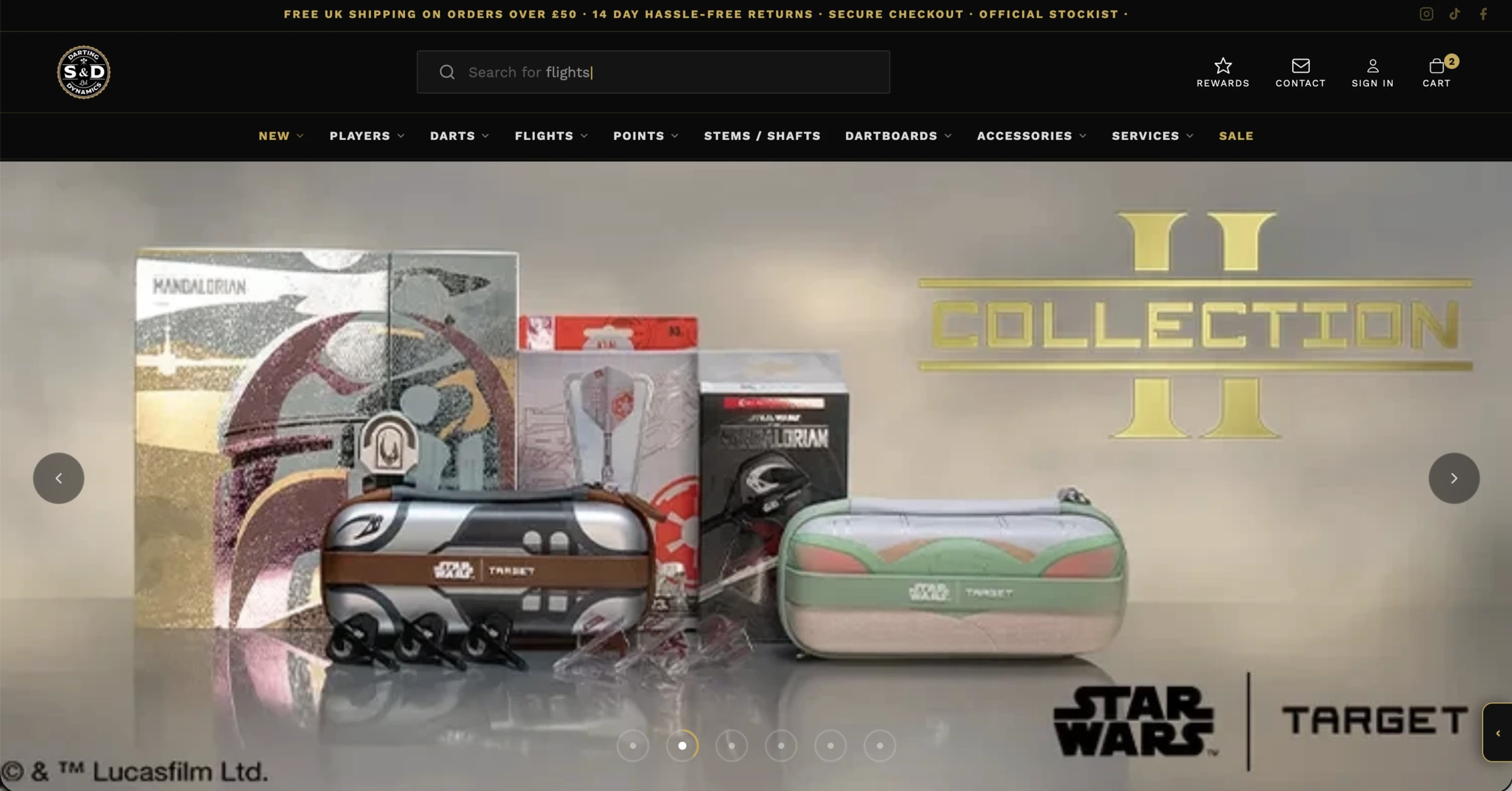
I built a custom Shopify theme around S&D’s branding: dark premium styling, gold accents, strong navigation, and homepage sections that can carry brand launches, featured collections, and the core shopping paths without feeling cluttered.
The header carries the full category structure: darts, flights, points, stems and shafts, dartboards, accessories, services, and sale. Search, rewards, account access, and cart are all visible without pushing the product content down the page. On a specialist retail site, that clarity matters.
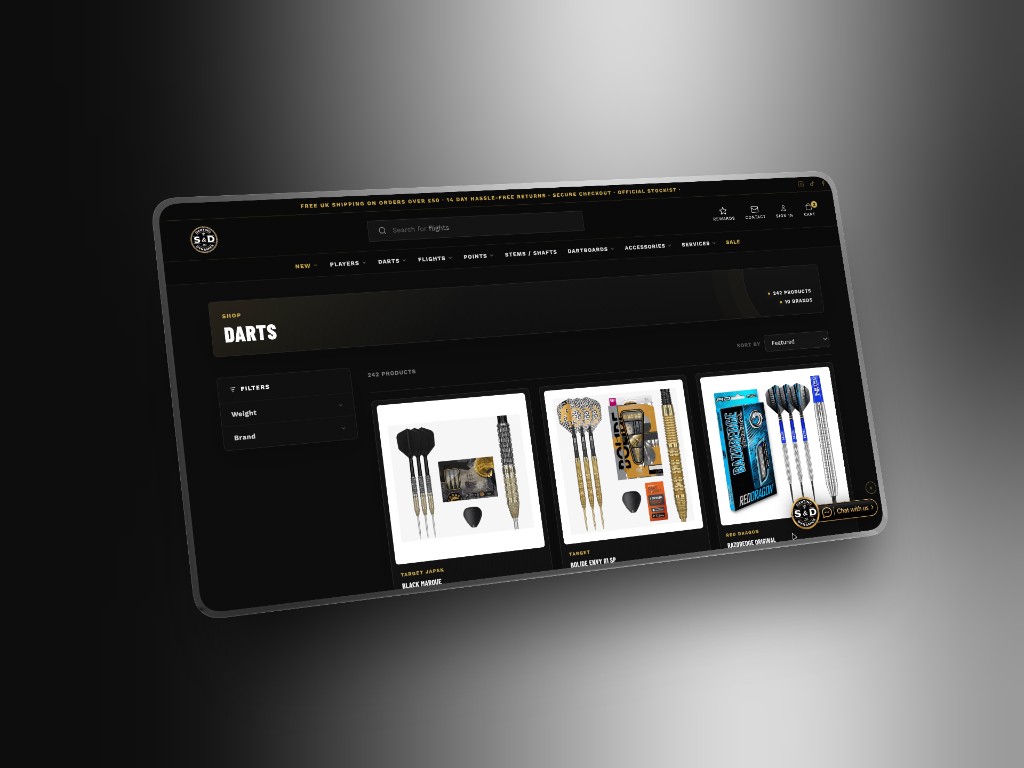
This is where most of the time went. A darts shop is not one product type. It is dozens of product types, each with its own variants, brands, and buying logic. The darts collection alone runs to 242 products across ten brands, with filters for weight and brand so customers are not scrolling endlessly on mobile.
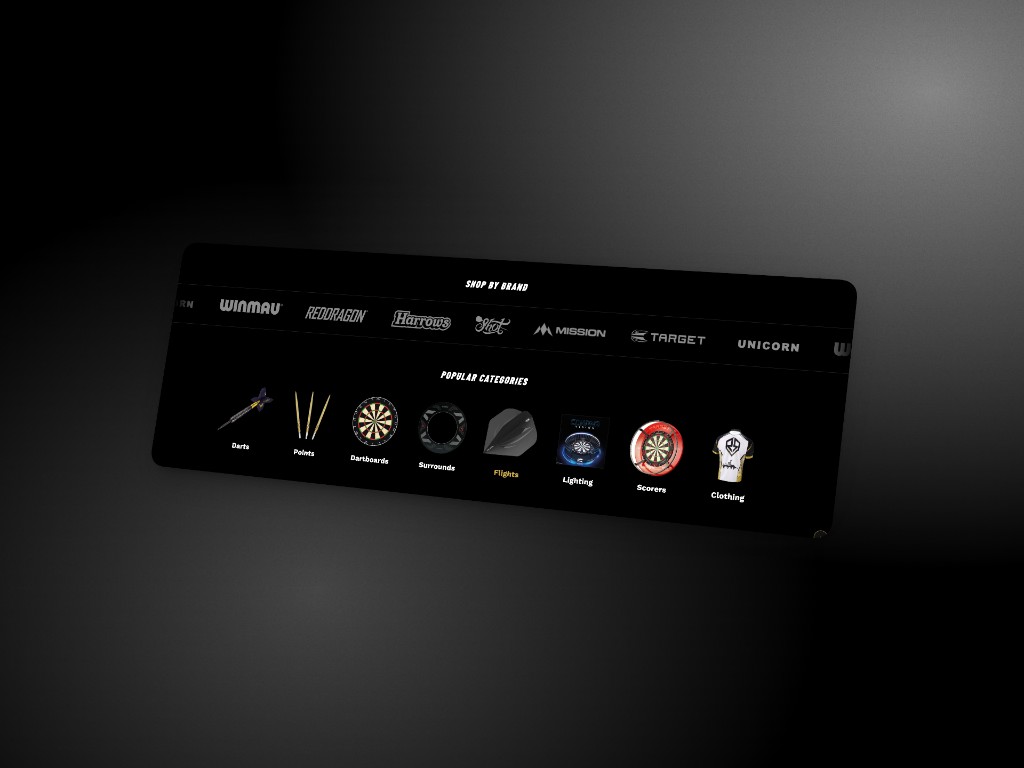
Shop by brand gives manufacturers like Winmau, Target, Red Dragon, Harrows, Shot, Mission, and Unicorn their own clear entry point. Popular categories push the most common shopping paths higher up the journey: darts, points, dartboards, surrounds, flights, lighting, scorers, and clothing.
Featured collections, such as the Target Japan launch, let new stock sit in a proper campaign space without breaking the rest of the catalogue structure.
Steve was clear that the store had to work on mobile. That was not a nice extra. It was the point. The mobile homepage keeps the in store offer visible too: try before you buy, directions to Salters Lane, and the trust signals a specialist retailer needs before someone commits to a purchase.
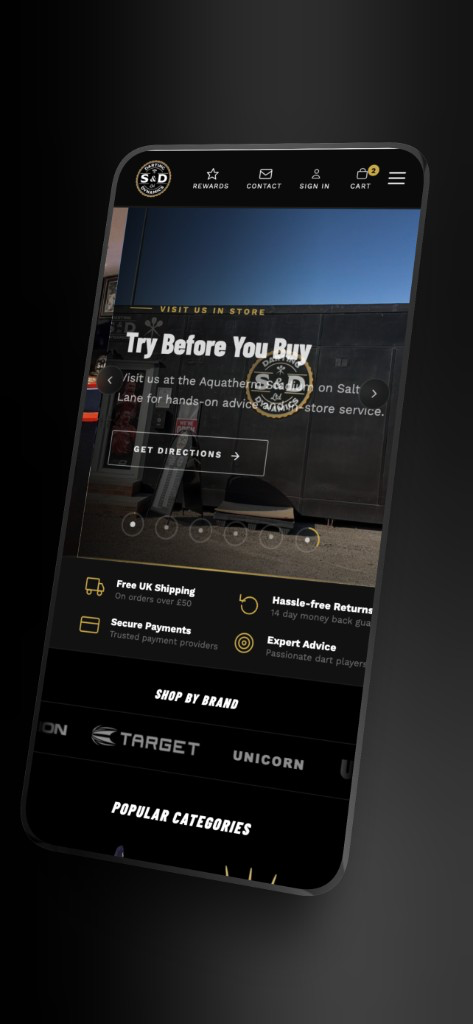
Free UK shipping over £50, returns, secure checkout, and official stockist messaging are all part of the same argument: this is a proper retailer, not a side project with a Shopify template dropped on top.
S&D Darting Dynamics now has a custom Shopify store built around its actual range: more than 750 products, structured for mobile, and ready to support the business online for the first time. The site is built to launch when Steve is ready to take the password down.
Open-source Mac app
A free, open-source screenshot editor for the Mac, built in Swift by BM.studio. Take a screenshot, give it a background, frame and shadow, and export a finished PNG without the image ever leaving your Mac.
Shotli is my own product. I take a lot of screenshots for client work and case studies, and every one needed the same finishing: a background, a bit of padding, a frame and a shadow. The tools that do that well tend to want an account, a subscription, or an upload.
So I built the one I wanted. Shotli is free to download from shotli.bm.studio, the source is on GitHub under the MIT licence, and nothing is uploaded. There is no account.
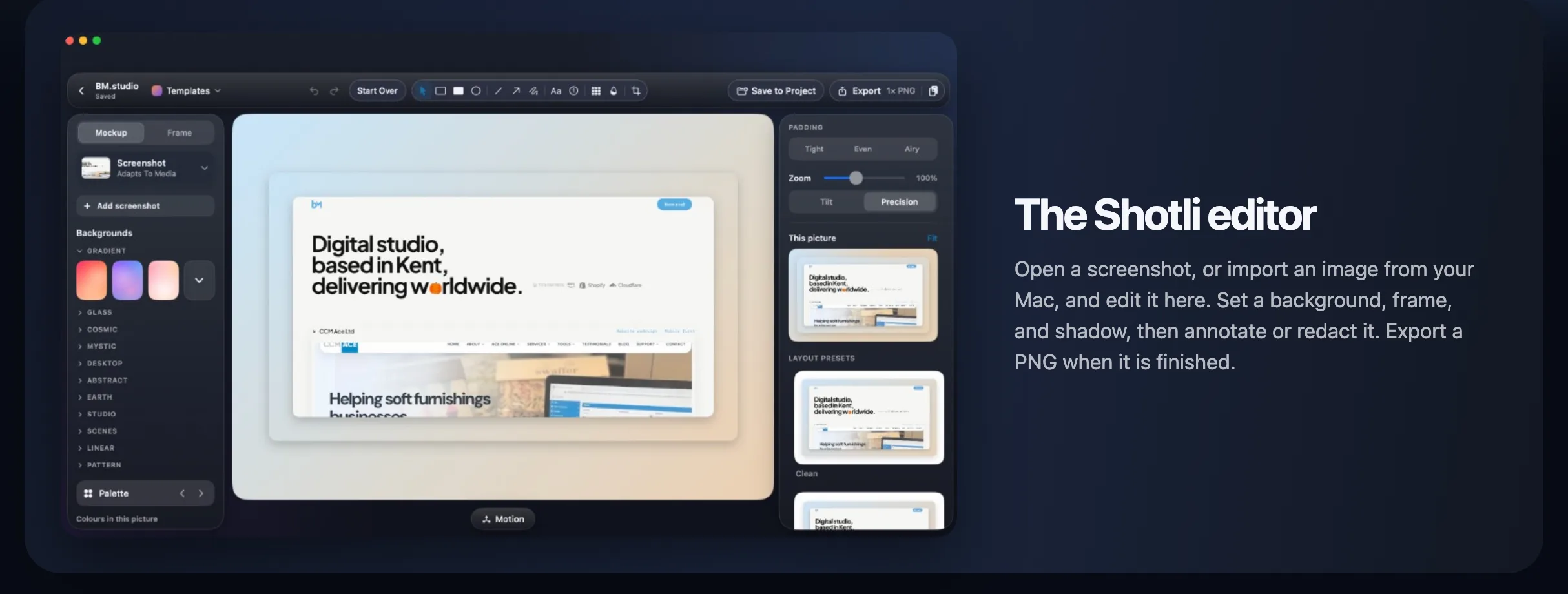
Open a screenshot, or drop in a PNG, JPEG or WebP you already have. Set the background, frame and shadow, then annotate or redact anything that should not be shared. Export a PNG when it is finished.
Screenshots stay together in projects. Each project is a folder on your Mac, so the library is easy to search and nothing is locked inside the app.
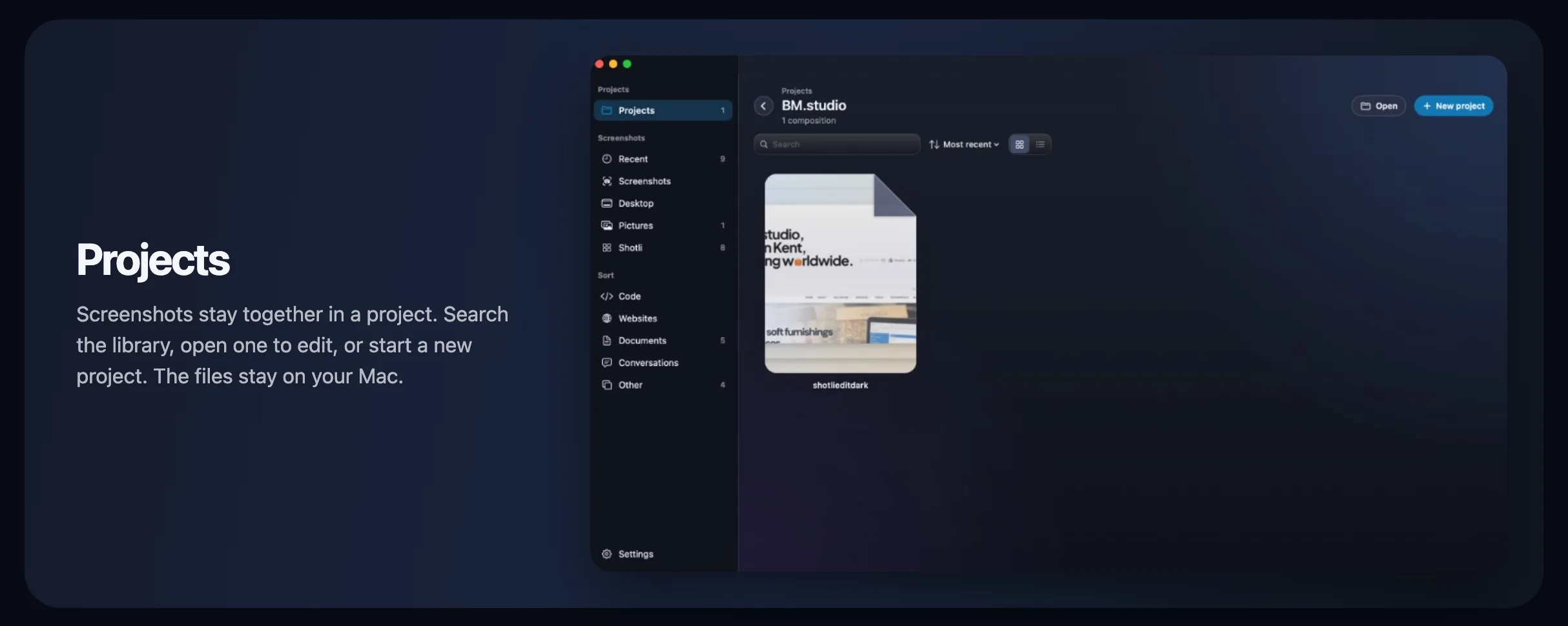
Shotli is a native Swift app for macOS 12 and newer. One download runs on Apple silicon and Intel, and a single script builds the disk image from the repo. I designed and built the app and its website, and publish each release with notes on GitHub.
Website redesign
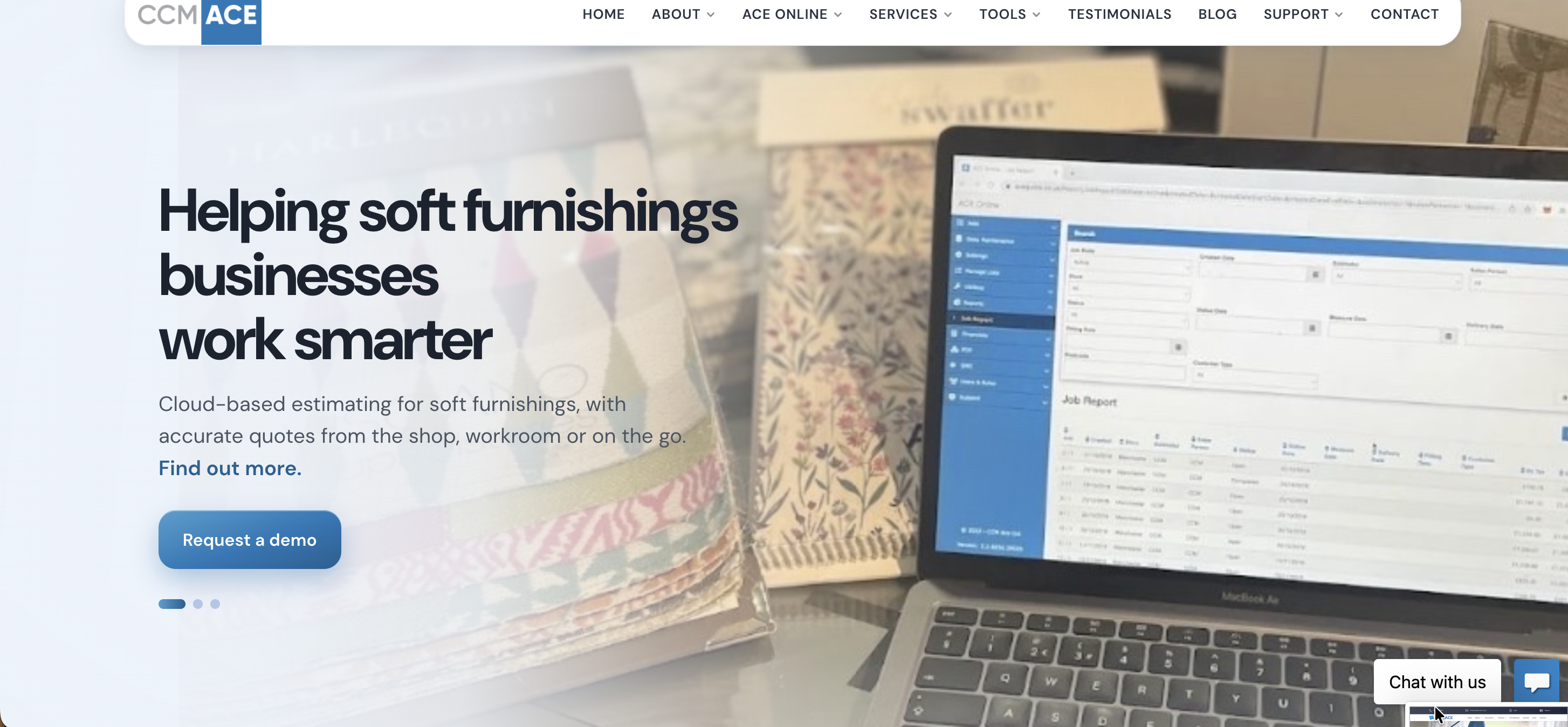
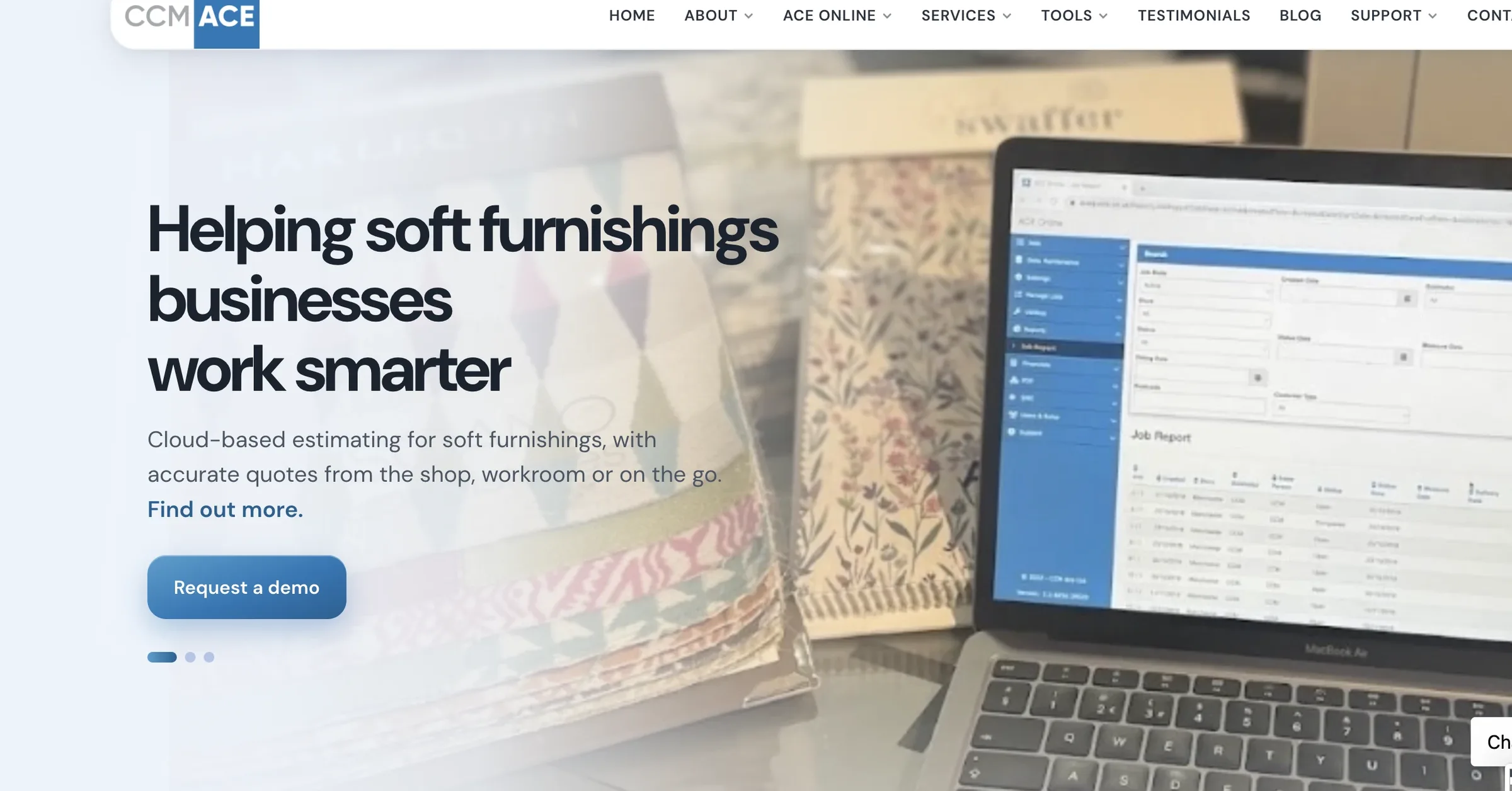
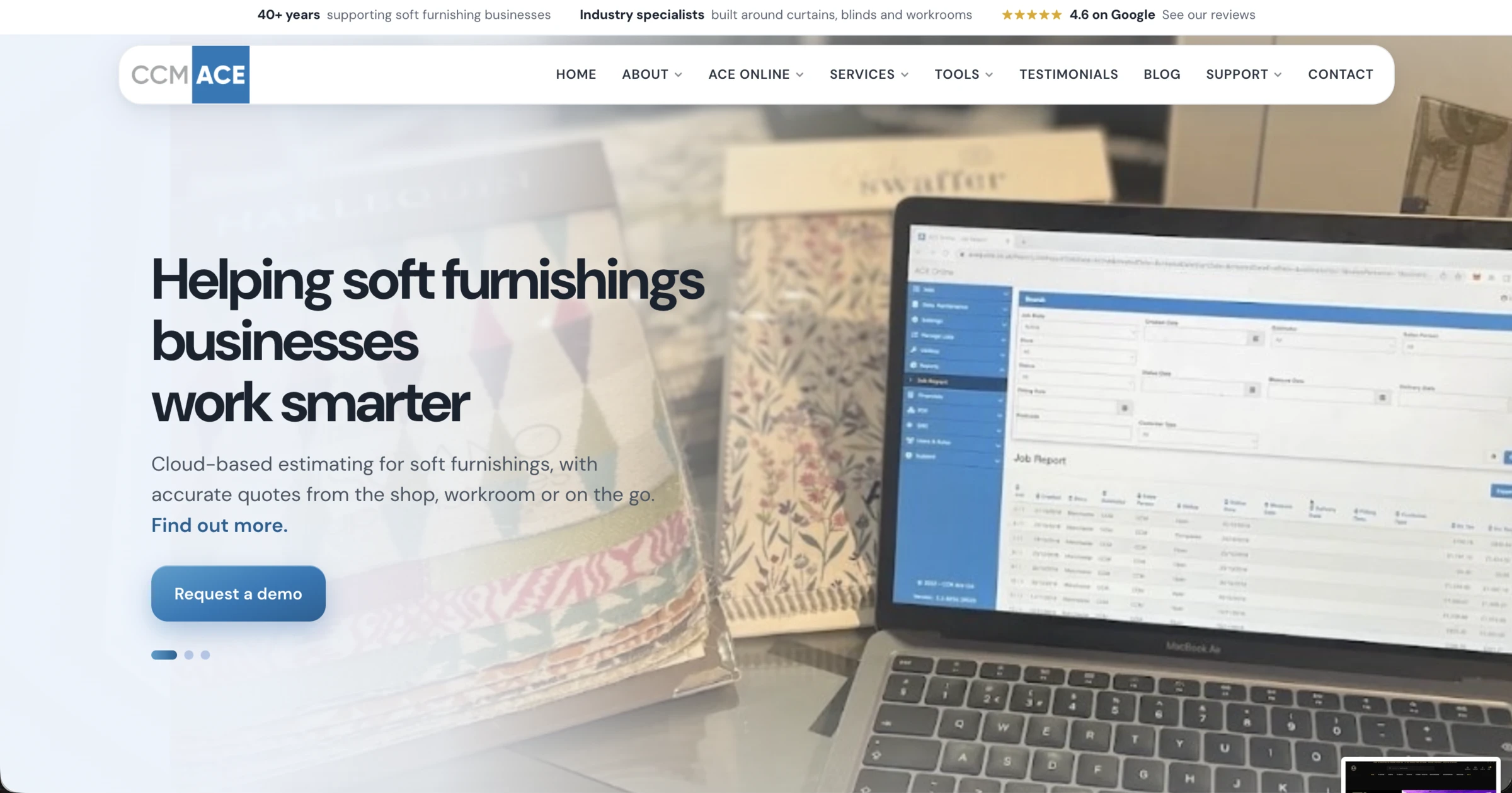
A full redesign for the Stockport software company behind ACE Online: more modern, mobile first and built with SEO in mind so the site matches the specialist product.
CCM Ace Ltd builds ACE Online, software for the soft furnishings trade. The product is specialist. The site needed to feel that way too.
Sarah Grant asked me to take over a new website that still needed a proper facelift. The brief was simple: make it more modern, make it work on a phone, and build it with SEO in mind so the site matches the product.
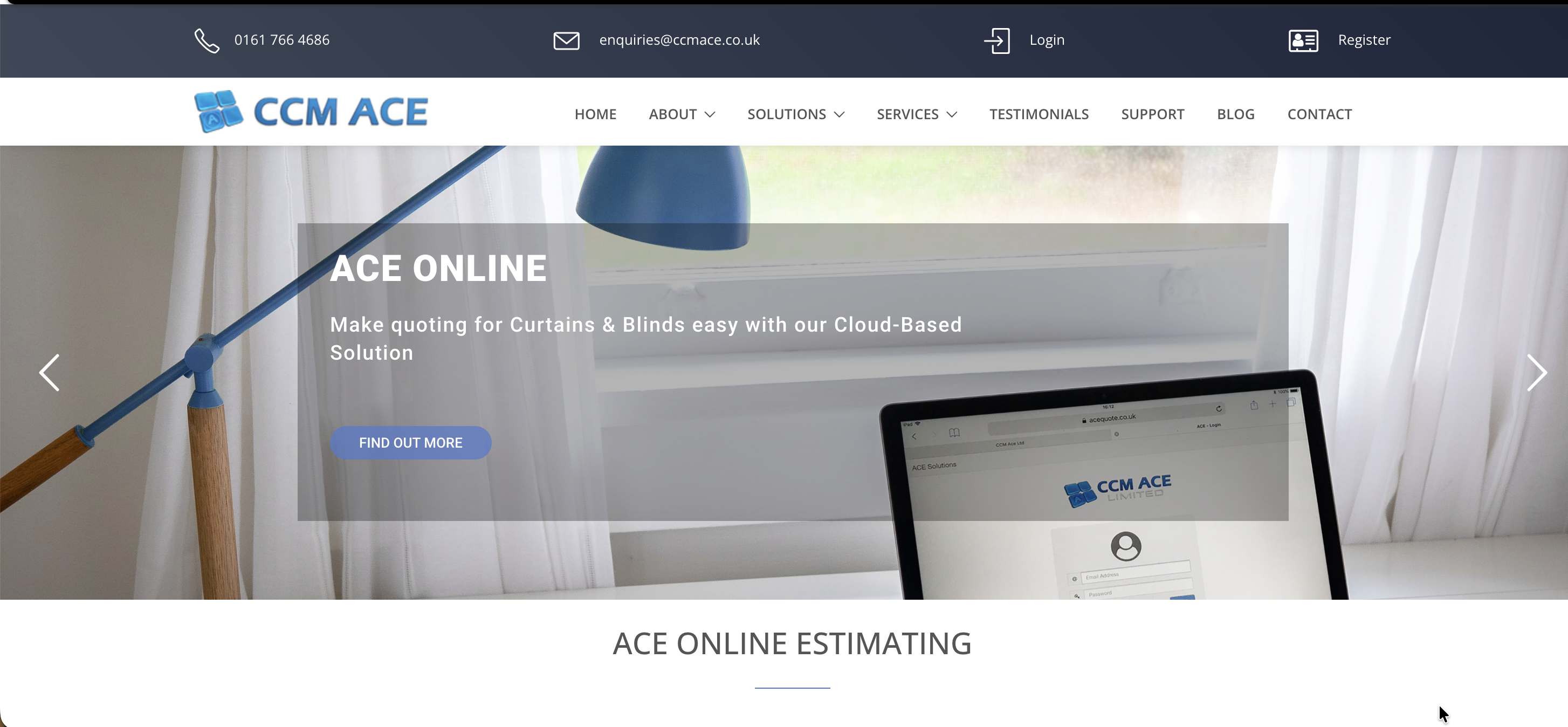
A specialist product can look generic online if the pages do not explain who it is for. CCM Ace did not need a template brochure. They needed a site that feels considered, loads properly on a phone, and gives Google a clear picture of ACE Online.
I redesigned the site in August 2026. Mobile first layout, cleaner pages, and SEO foundations so the specialist offer is easy to read for people and for search.
“Michael took over our new website a few weeks ago and has already given it a much-needed facelift. He has a great eye for detail and a real understanding of how to make each page visually appealing.”
Sarah Grant, CCM Ace Ltd
Web design and development
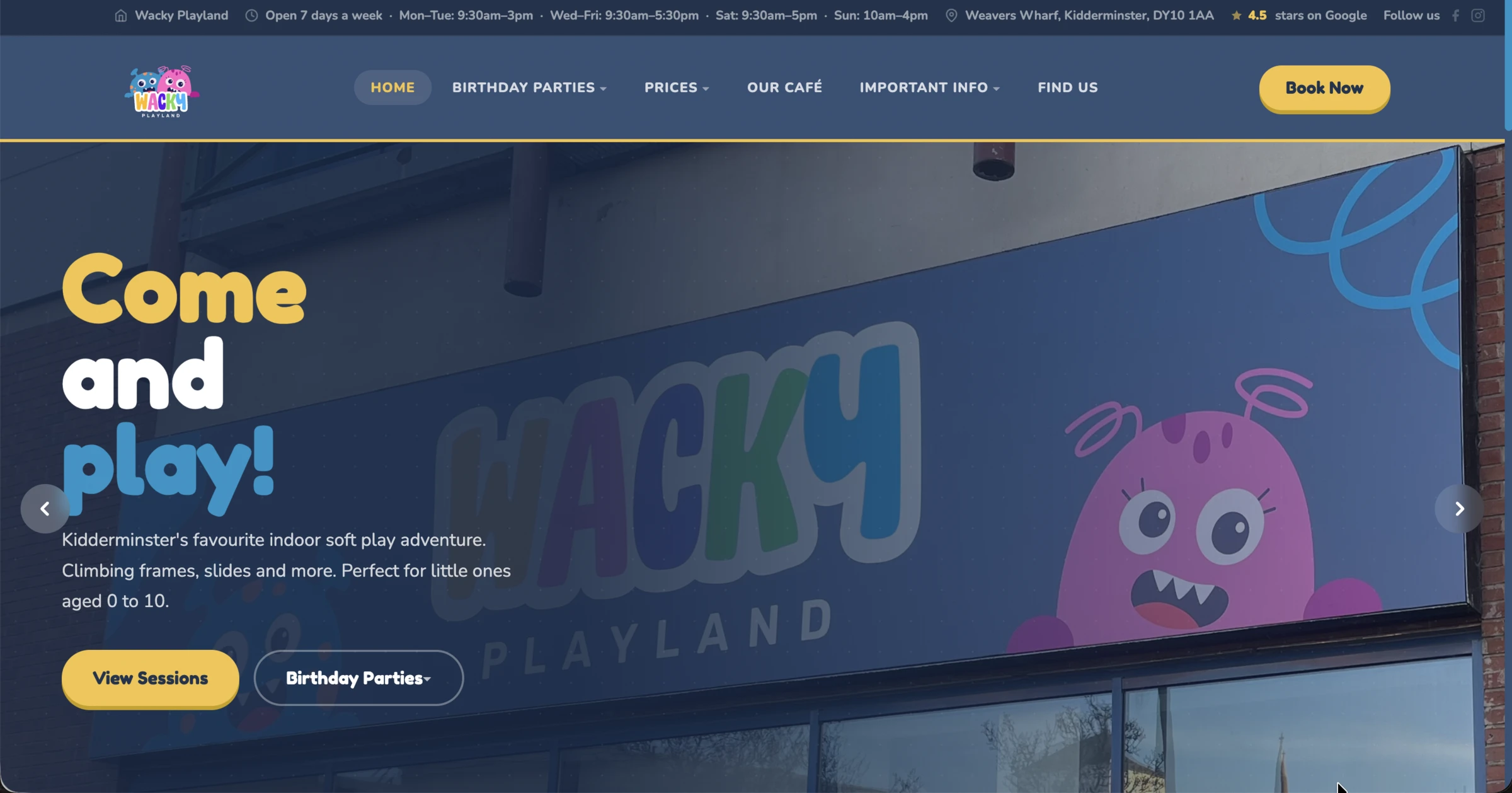
A 14 page mobile first redesign for a Kidderminster soft play centre, built around bookings, party packages and getting families through the door.
Wacky Playland is a soft play centre in Kidderminster. Most customers find them on a phone, make a quick decision, and either book or move on. Their existing website was built in-house on Wix. It had the essentials, but it was not doing the job it needed to do: getting families in through the door.
The brief was clear. Build something that works properly on mobile, organises all the information across a sensible number of pages, and makes it as easy as possible for a parent to find what they need and book.

Before any design work, it is worth being specific about the visitor. For a soft play centre, that is usually a parent, on a phone, often one-handed, frequently in a hurry, and quite often mid-way through managing a toddler. They have a short list of questions: when are you open, how much is it, do you do parties, can I book now. They have very little patience for anything that gets between them and the answers.
That profile decides everything downstream: how big the tap targets are, how much text goes above the fold, where the booking link sits, and how many taps it takes to get from landing to booked.
The problems were the familiar ones for a DIY build in this sector. The layout had not been designed for mobile, which is where the overwhelming majority of the traffic comes from. Information about sessions, parties, prices and booking was spread around without a clear path through it. Booking, the single most valuable action on the entire site, was not front and centre. And the template look did not convey the fun, welcoming, trustworthy feel a soft play centre trades on.
None of that means Wix is the villain. A DIY build gets a business online quickly, and for plenty of businesses that is enough. It stops being enough when the site is the main booking channel.
The new site is fourteen pages, built from scratch. That sounds like a lot for a single venue, and it would be if the pages overlapped. They do not. Multiple session types, party packages, FAQs, and location and parking information each get their own page, covering one thing clearly.
The advantage is twofold. A parent looking specifically for party packages lands on a page about party packages rather than scrolling a homepage that covers everything. And each page can rank for the thing it is actually about, instead of one homepage competing for every search at once.
Every page carries a visible, accessible link to book. Not tucked into a footer, not three clicks deep behind a menu. If someone decides to book while reading the FAQ page, they should not have to navigate anywhere to do it.
The whole build was mobile first: tap targets big enough for one thumb, text readable without zooming, and layouts that adapt cleanly at every screen size.
Worth knowing: Google ranks your mobile site, not your desktop site. A site that works well on mobile does not just convert better. It ranks better too.
Soft play is a fun, family environment, and the site needed to feel that way without becoming hard to use. Bright and energetic in the imagery and colour. Calm and predictable in the navigation and layout. A parent who is tired and distracted should still be able to find the price of a Saturday session in about ten seconds.
A booking-focused site that matches the energy of the business and gives parents a clear path from first visit to confirmed session. Live in two weeks, built to convert on the device families actually use.
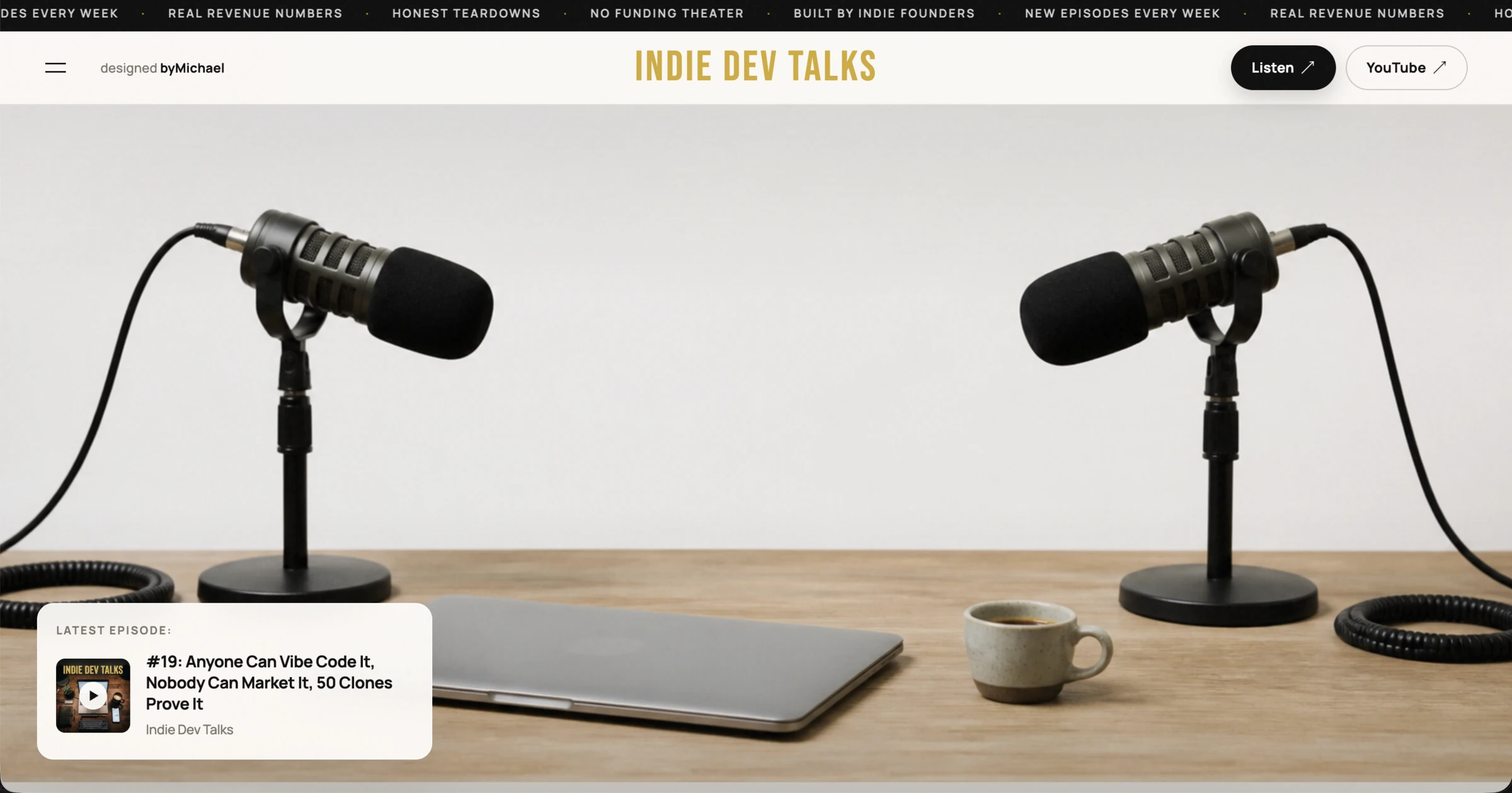
Podcast website
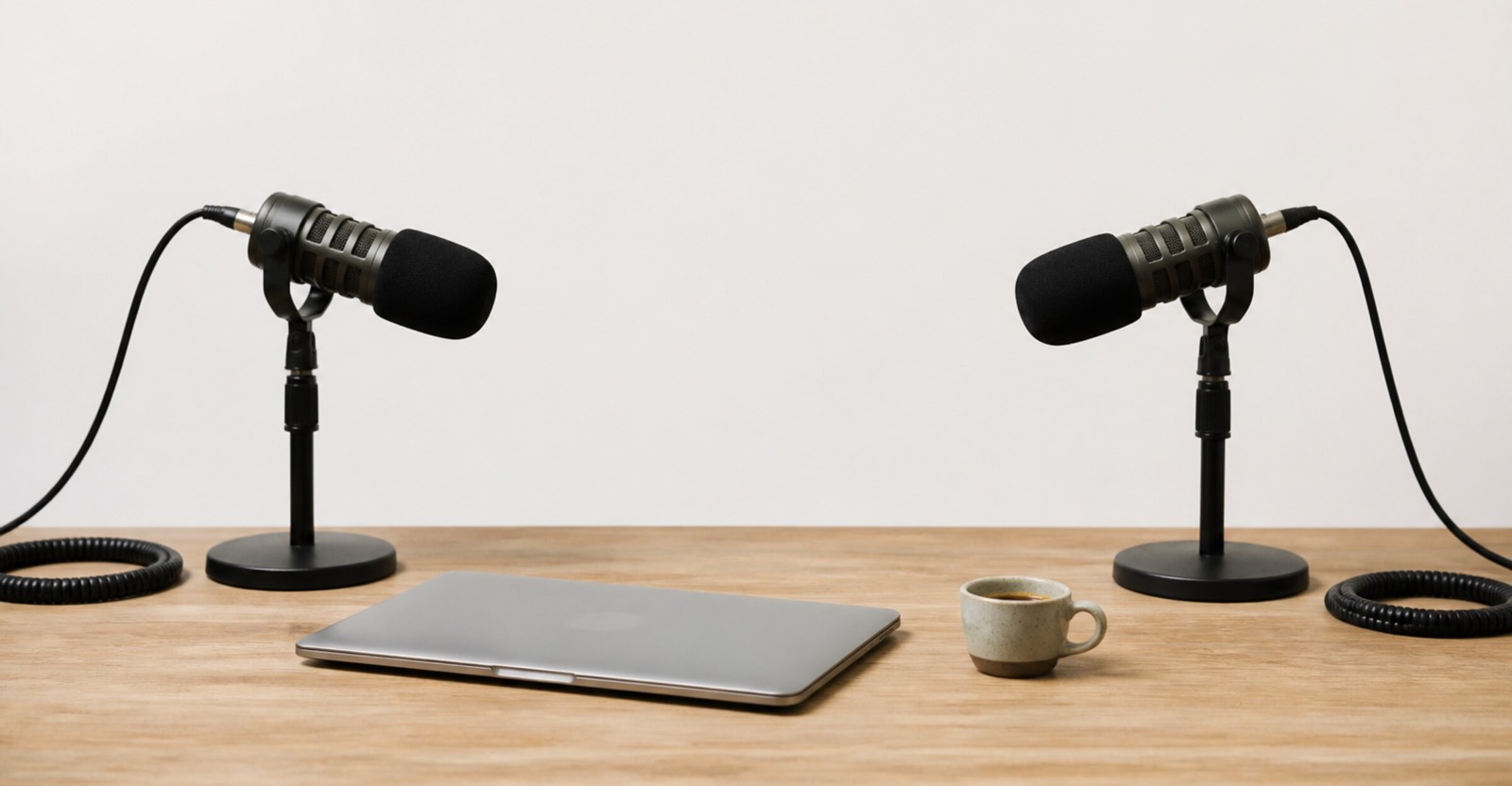
A bespoke podcast home on Cloudflare with strong brand typography, live episode listings from Apple Podcasts and clear paths to listen and subscribe.
Bespoke rebuild
A complete strategic rebuild for a net clipping machinery business: sharper positioning, mobile first layout and copy that finally matched the product.
ClippaNet manufactures and sells net clipping machinery, a niche technical product with a very specific global customer base. When Matt Thacker, the director of MATS Ltd and ClippaNet, came to me, he had already seen me build the MATS Ltd website from scratch. He was happy enough with the result that he asked me to do the same for ClippaNet.
What followed was a full rebuild: not just a visual refresh, but a rethink of the messaging, structure, and conversion path from the ground up.
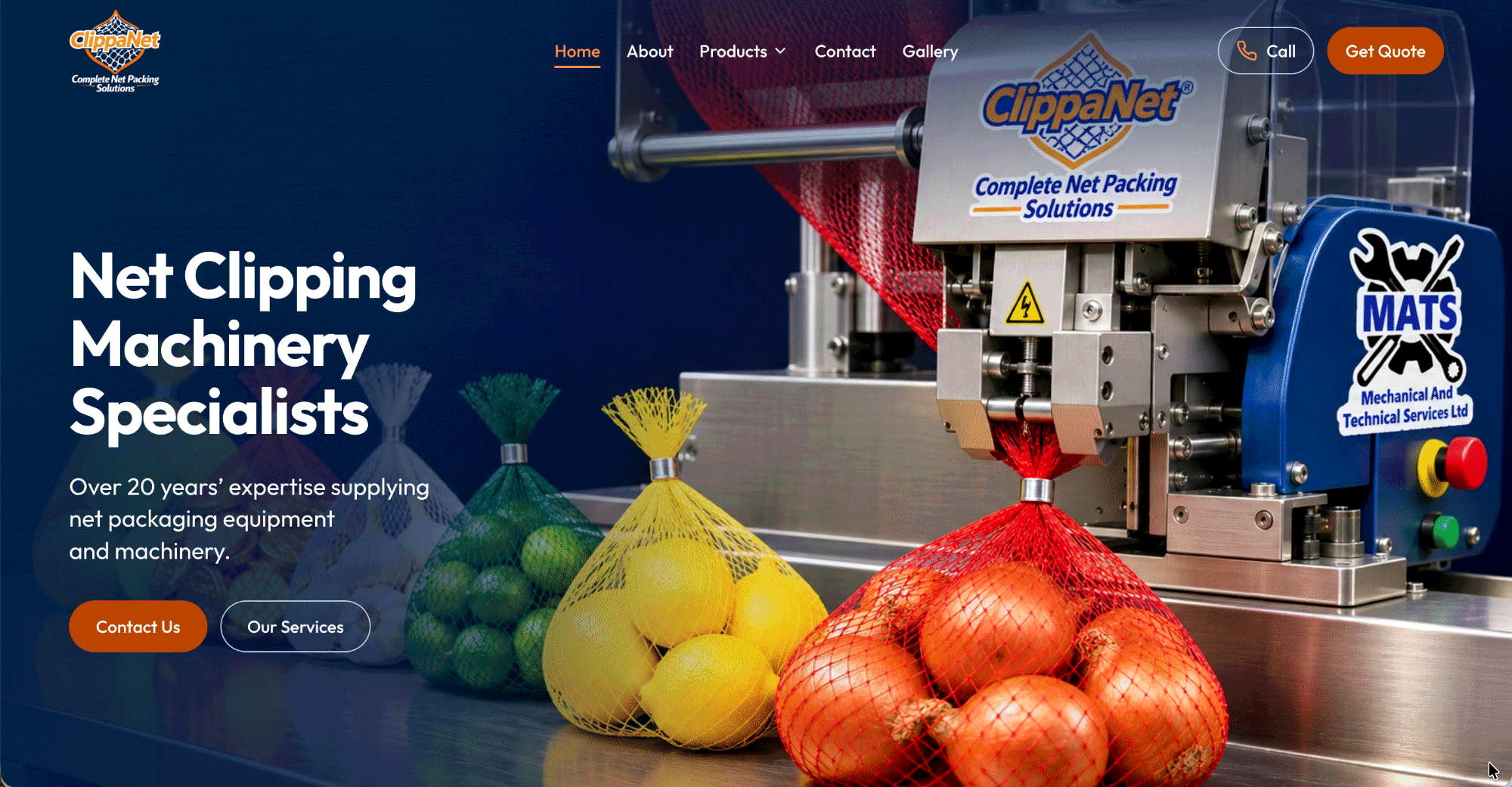
The product was never the problem. The machinery does something specific and does it well, and the business had years of customers to prove it. The website simply was not communicating any of that.
Someone landing on the old homepage could not tell within a few seconds what ClippaNet made or who it was for. The layout had been designed for a desktop screen and squeezed down for phones afterwards, which is a real problem when your buyers are spread across Europe and the US and are as likely to open a link on a phone as at a desk. There was no obvious next step for someone who was interested. And unoptimised images made the pages heavier than they needed to be, which hurts both patience and rankings.
The first job on a rebuild like this is not design. It is deciding what the homepage says before anyone scrolls.
For a technical product, the temptation is to lead with specification. It is the thing the business knows best. But a specification only helps someone who has already established they are in the right place. So the new homepage opens with a plain statement of what ClippaNet makes and who buys it, and the detail follows underneath for the people who want it.
That single decision changes what the rest of the site has to do. Once the homepage qualifies the visitor, the product pages can be genuinely technical without losing anyone.
The rule I always follow: if you cannot explain what a business does in one sentence on the homepage, the site is not doing its job yet.
The rebuild was designed for a small screen first and scaled up, rather than the other way around. That sounds like a technical detail. It is really a content decision. Designing narrow forces you to decide what matters most on each page, because you cannot put three things side by side and hope the visitor picks one.
For an exporter it also has a practical edge. Buyers browsing on mobile networks, in different countries, at times when nobody is in the office, need pages that load quickly and read cleanly without pinching and zooming. Every image was optimised, the code was kept lean, and the site was built custom. No page builder, no framework loading features the site does not use.
The old site had no clear route from interest to enquiry. The new one has a prominent quote button above the fold, contact details that are easy to find on any device, and a form short enough to complete on a phone.
For a considered B2B purchase, the enquiry form is not the finish line. It is the start of a conversation that might run for weeks. That is an argument for asking less, not more. Name, contact, and a sentence about the application is enough to get the right conversation started. Qualifying can happen in the reply.
Matt’s feedback was straightforward: the site reflects the business properly now. The messaging is clear, it works on every device, and the enquiry path is obvious. The rebuild took two weeks, and the working relationship carried on from there. MATS Ltd first, ClippaNet second, both built from scratch.
First website build
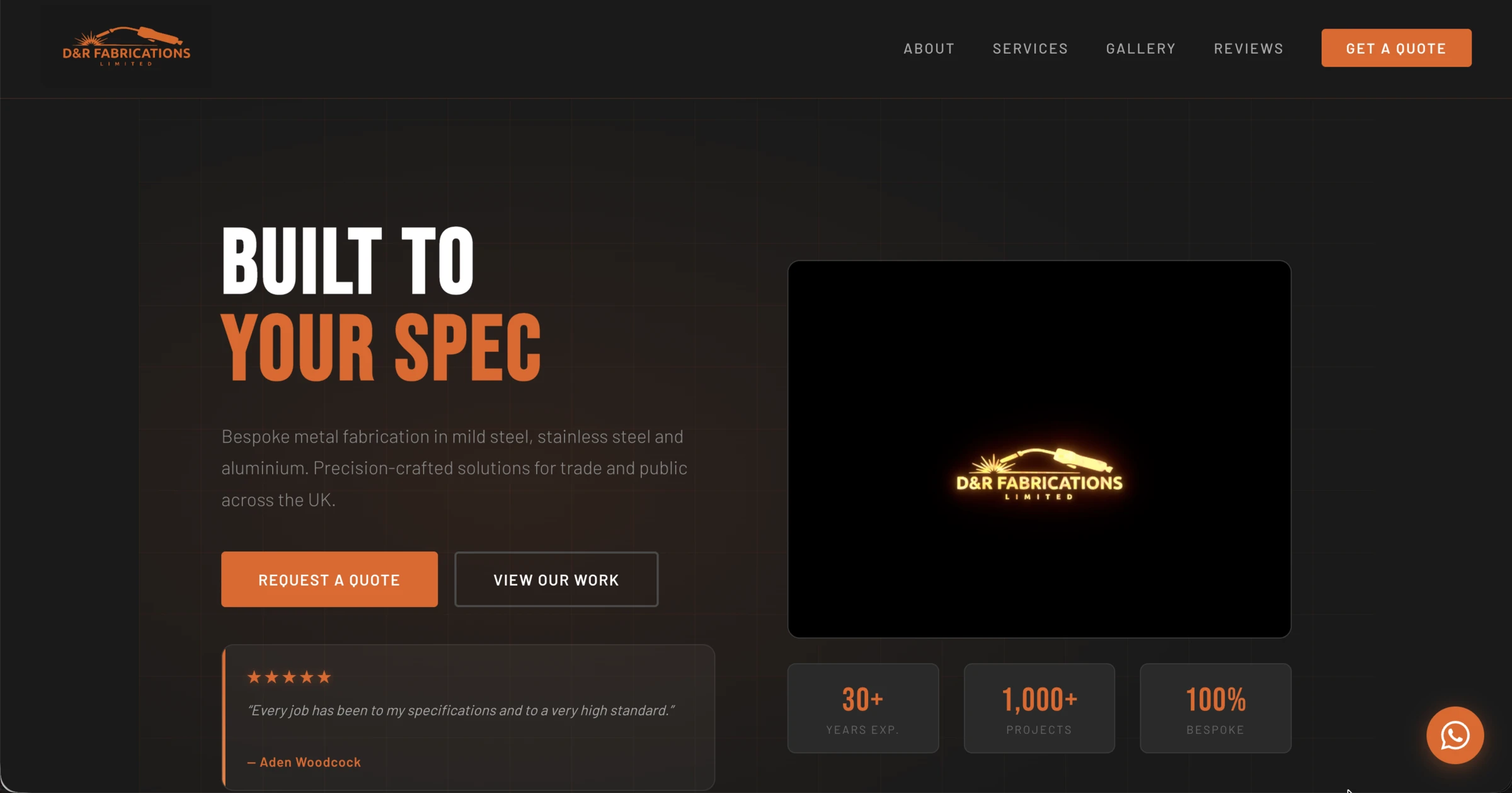
Thirty years of precision metal fabrication brought online for the first time with a bold industrial identity, clear service showcases and frictionless enquiry flows.
D&R Fabrications Ltd is a bespoke metal fabrication business in Sittingbourne, Kent. More than thirty years of precision work, but almost no digital presence. Danny French came to me on recommendation. He had a few photos, a rough idea of what they do, and a clear need: look credible online and make it easy for new customers to enquire.
That is a familiar brief for trades and industrial firms. The work is excellent. The website either does not exist or looks like an afterthought. Competitors with weaker workshops but better sites win the first click.

There was no structured site to refresh. This was a first proper build. The goal was not a flashy brochure. It was a site that explains what D&R makes, shows they can do it, and gets a quote request in front of the right visitor fast.
Fabrication buyers decide quickly. They want capabilities, proof and a frictionless route to contact, usually on a phone between jobs.
The layout, typography and tone were shaped around how buyers evaluate a metalwork supplier. Service pages set out capabilities plainly. The visual identity is confident and industrial, the kind of site you take seriously within seconds of landing.
Danny arrived with a handful of photographs and a clear idea of what the business does. No brand guidelines, no existing copy, no site to migrate. For a lot of projects that would be a problem. For this one it was the fastest possible start.
There was nothing to unpick. No legacy structure to work around, no half-finished platform to argue with, no page nobody wants to delete. The whole thing went from brief to live in a week, and most of that speed came from the absence of an existing site.
In fabrication, the work photographs well and the words rarely add much. A picture of a finished balustrade or a welded frame settles the question of whether you can actually do the work faster than any capability list.
So the layout is built around the images rather than treating them as decoration. That puts a real obligation on the client. The photos have to be current, well lit and of work they are proud of. Danny delivered those, which is a large part of why the build moved quickly.
If you run a trade business, this is the highest-return thing you can do: take good photographs of finished work, consistently, on a decent phone camera. It is worth more to your website than any copy anyone writes for you.
There is a default look for fabrication sites: black background, steel texture, aggressive typography. It signals the right industry and then makes everything hard to read, particularly on a phone in daylight.
The D&R build keeps the confidence and drops the cliches. Strong typographic contrast, generous spacing, and colour used deliberately rather than as a mood wash. It reads as industrial because the content and the photography are industrial, not because the interface is imitating metal.
Every page has an obvious next step. Contact paths work on mobile and desktop. With a focused brief and clear assets from Danny, the site was designed, built and launched within a week.
Danny’s feedback was straightforward: efficient from start to finish, great looking result, and he would recommend the process to anyone who needs a proper website.
Bespoke build from scratch
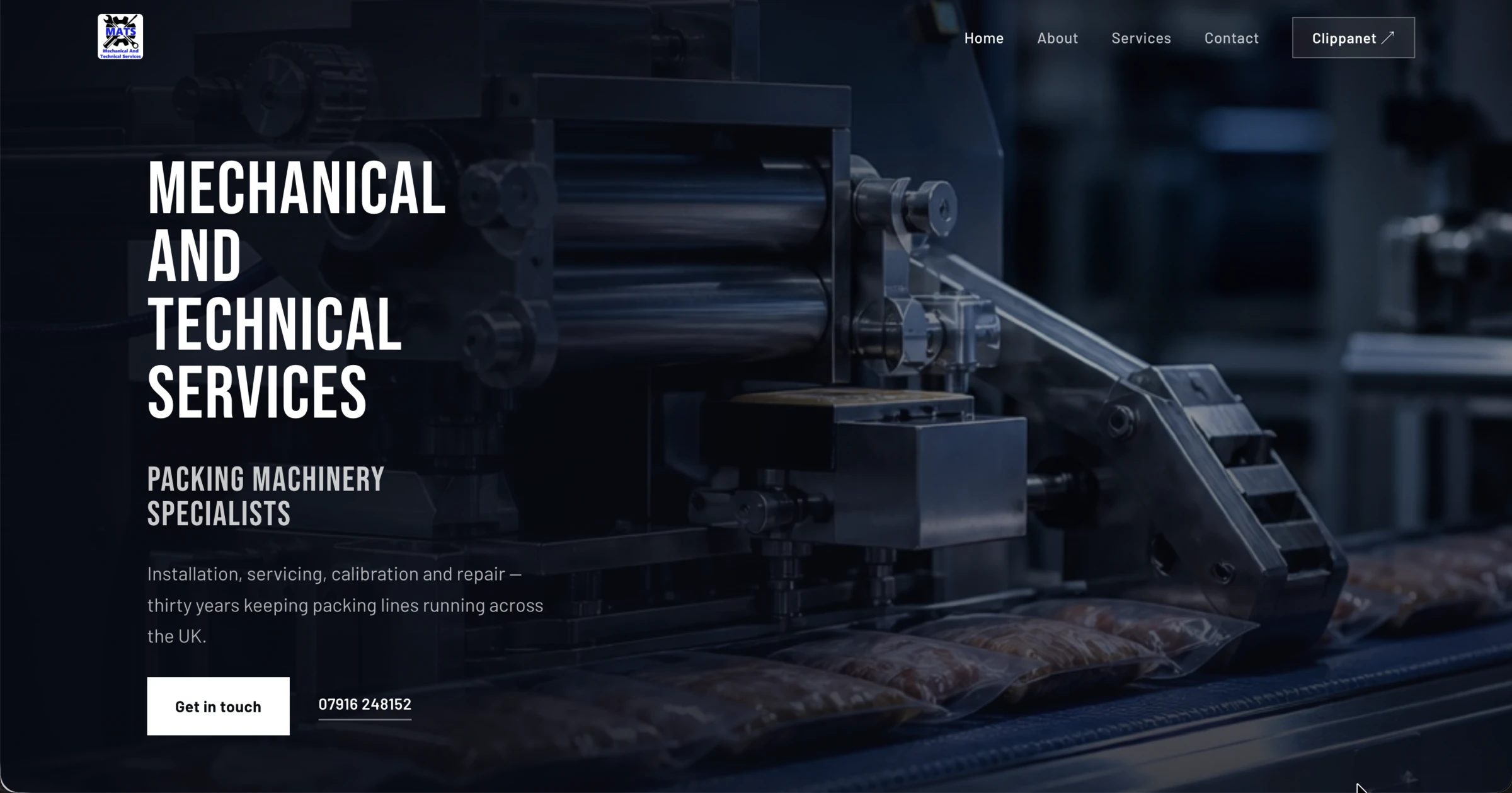
A proper digital presence for a packing machinery business with 30 years of UK wide installation, calibration, repair and parts supply expertise.
MATS Ltd is a packing machinery specialist based in Whitstable, Kent: installation, calibration, repair and parts supply, UK-wide, with more than thirty years in the trade. Matt Thacker, the director, came to me needing a proper digital presence, something that reflected the depth of the business and made it easy for new clients to get in touch.
There was no structured site to refresh. This was a build from scratch, the kind of project where the work is excellent but the online presence has never caught up.
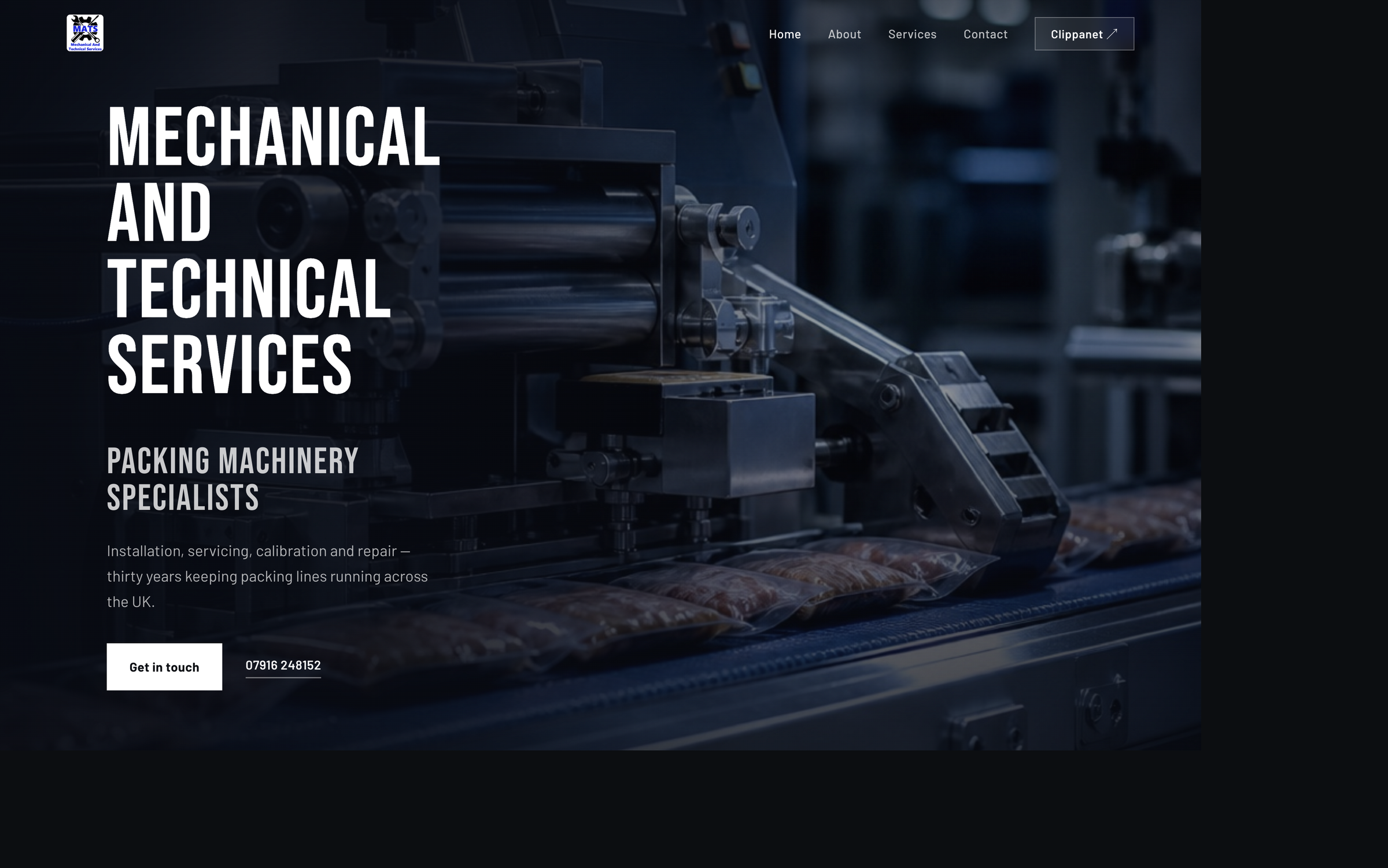
Machinery buyers decide quickly. They want to see what you do, proof you can do it, and a fast route to contact, often from a phone between jobs. The site needed to feel competent and established from the first click, not like a generic template with a logo dropped in.
Service clarity matters. From installation and UKWF calibration to diagnostics, parts supply and custom machinery solutions, each service needed its own clear section with an obvious next step.
The build mapped directly to how the business operates: clear service breakdowns, confident copy for a technical audience, and enquiry paths that work whether someone is on a factory floor or at a desk planning a line upgrade. Professional design, mobile first layout, and SEO foundations included from day one.
MATS had decades of relationships and a UK-wide reputation before I got involved. That is exactly why there was no site: when the phone rings because someone worked with you in 2011, a website feels like a nice-to-have.
The problem shows up later, and quietly. The people who knew you retire. A buyer at a new plant searches for calibration or a relocation quote and finds nothing they can evaluate. You are not losing enquiries you can see. You are missing ones that never reach you. That is the case for building, and it is a harder case to make than a dated site, because nothing is visibly broken.
The copywriting was as much of the job as the design. Packing machinery is a field where the buyer usually knows more about the equipment than the person writing the website, and they can tell within a paragraph whether you actually do the work or resell someone who does.
So the language stays specific. Installation and relocation. UKWF calibration. Diagnostics and repair. Parts supply. Consultation and custom machinery solutions. Each named plainly, each with its own section. No filler, because a specifier reading that assumes you are a middleman.
A useful test for technical trades: could a competitor put their logo on your homepage and have it still make sense? If yes, the copy is not specific enough to be doing any work.
Machinery enquiries arrive from two places, and they behave differently. One is a phone on a factory floor: someone with a line down, wanting a number to ring in under ten seconds. The other is a desk, weeks ahead of a planned upgrade, comparing three suppliers properly and reading everything.
A site that only serves the second visitor buries the phone number under an about section. A site that only serves the first is a business card with no substance. The MATS build carries both: contact routes visible at every scroll position, and enough depth underneath for the desk visit to be worth making.
The site was live in two weeks. Matt’s feedback was straightforward: communication was clear throughout and the result was exactly what they needed. He was happy enough with the MATS build that he came back within months to commission a full ClippaNet rebuild as well.